
Maui’s roads are unlike almost anything most mainland drivers have experienced before moving here or visiting for an extended stay. The Road to Hana winds through hundreds of tight turns and steep grades carved into volcanic terrain, while the drive up to Haleakala climbs from sea level to over ten thousand feet in a matter of miles. Even routine daily driving around Kahului, Wailuku, or up toward Kula involves more elevation change and tighter curves than a typical mainland commute ever would. This terrain is part of what makes Maui so spectacular to drive through, but it also places genuine extra strain on brakes and suspension that many drivers do not fully anticipate.
Why Maui’s Volcanic Terrain Demands More From Your Brakes
Sustained descents, like the long drop from Haleakala’s summit or the winding stretches along the Hana Highway, require continuous or repeated braking to control speed against gravity, generating far more heat than the shorter, intermittent braking typical of flat mainland driving. This heat buildup accelerates brake pad wear considerably, and in more severe cases, repeated heat exposure on a long descent can lead to a phenomenon called brake fade, where stopping power temporarily diminishes because the brakes have absorbed more heat than they can dissipate quickly enough.
The volcanic terrain itself adds another layer to this challenge, since many of Maui’s steepest roads combine grade with tight, continuous curves rather than long, straight descents, meaning drivers brake repeatedly through turns rather than holding steady pressure on a single downhill stretch. This pattern of frequent, hard braking through curves compounds the heat generated by the grade alone.
How This Terrain Affects Suspension Components Too
Constant elevation change and tight curves ask a great deal from struts, shocks, and related suspension components, which have to manage weight transfer through curves far more frequently than they would on straighter mainland roads. The volcanic rock terrain underlying many Maui roads also means pavement conditions can shift quickly, with sections of smooth, well maintained road giving way to rougher patches without much warning, adding an uneven surface challenge on top of the grade and curve demands already at play.
Over time, this combination of constant curves, elevation change, and occasionally rough pavement wears suspension components faster than the same mileage would on flatter, more consistent mainland roads, which is why suspension issues tend to show up sooner for vehicles that regularly navigate routes like the Road to Hana or the Haleakala climb.
Warning Signs Worth Watching For
A high pitched squealing sound from a brake wear indicator is often the first sign that pads have thinned to the point of needing attention. A burning smell after a long descent, or a brake pedal that feels noticeably softer than usual, suggests the brakes have been pushed hard enough to warrant an inspection before attempting another significant grade. On the suspension side, a ride that feels bouncier than it used to, clunking noises through curves, or a vehicle that feels less stable through turns than it once did are all worth having checked.
If you have experienced a starting issue after a long day of driving through Maui’s terrain, our guide on the top 10 reasons your car won’t start and how to get back on the road covers a range of causes worth ruling out alongside any brake or suspension concerns you may be noticing.
Driving Habits That Reduce Strain On Steep Descents
Using a lower gear during a long descent, whether through a manual shift mode or simply allowing an automatic transmission to hold a lower gear rather than coasting in drive, uses engine braking to help manage speed rather than relying entirely on your brake pads and rotors. This technique is particularly valuable on routes like the descent from Haleakala, where the sustained elevation drop otherwise places continuous demand on brakes alone.
Rental vehicles and vehicles unfamiliar to a driver deserve a bit of extra caution on this front, since visitors attempting the Road to Hana or the Haleakala summit for the first time often are not used to how their particular vehicle handles engine braking or how quickly its brakes heat up on a sustained grade. Taking a few minutes to get familiar with these characteristics on a shorter, less demanding stretch of road before attempting one of Maui’s more serious descents is a simple habit that meaningfully reduces risk.
Allowing brakes a chance to cool during a long drive, rather than riding them continuously through an extended descent, also helps reduce the risk of brake fade on Maui’s longer downhill stretches. Maintaining a bit more following distance on winding roads allows for earlier, more gradual braking through curves rather than sudden, hard stops that generate more heat and wear.
Why Maui Drivers Should Check These Systems More Often
Standard maintenance intervals are generally built around average mainland driving conditions, which do not account for the extra strain that sustained elevation change and tight curves add. Drivers who regularly navigate the Road to Hana, the Haleakala climb, or similar terrain heavy routes should consider having brakes and suspension components checked more frequently than the standard schedule suggests, particularly ahead of a planned trip through some of the island’s more demanding roads. This is worth keeping in mind for both daily drivers and anyone who owns a vehicle used primarily for exploring Maui on weekends, since occasional heavy use on the island’s toughest roads can accelerate wear just as much as frequent daily exposure does.
Why A Mobile Mechanic Fits Maui’s Terrain Well
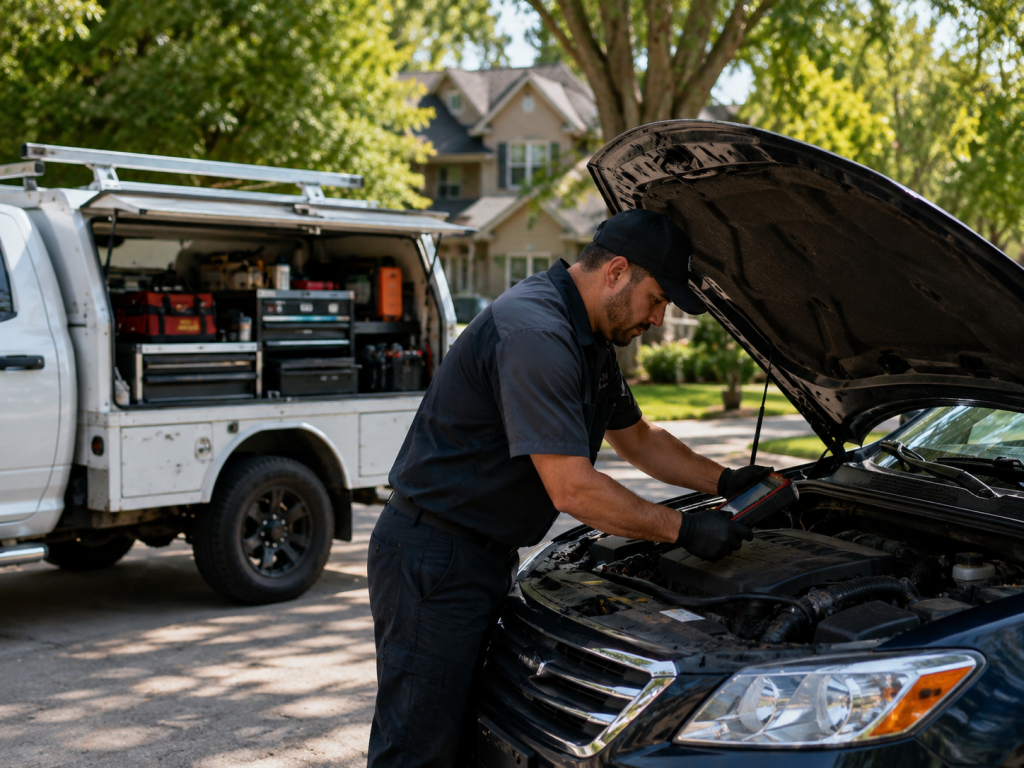
Given how much extra strain Maui’s volcanic terrain places on brakes and suspension, having a technician familiar with these specific driving conditions come directly to your home or workplace offers a real advantage. A mobile mechanic can inspect brake pads, rotors, and suspension components right where your vehicle is parked, catching wear that this terrain accelerates before it becomes a more serious and expensive repair, or worse, a safety concern on a remote stretch of road.
We covered the broader benefits of this approach in our article on why mobile mechanics are better than traditional auto shops in Maui, which explains how convenience and local familiarity come together, particularly useful for the kind of ongoing maintenance that Maui’s terrain genuinely requires.
Stay Ahead Of What Maui’s Roads Are Doing To Your Car
Maui’s dramatic volcanic terrain is part of what makes the island such a stunning place to drive, but it also means brake and suspension wear happens faster here than it would on a typical mainland commute. Paying attention to early warning signs, adjusting driving habits on steep descents and winding roads, and having these systems checked more often than a standard schedule suggests are all simple ways to stay ahead of the extra demands this terrain places on your vehicle.
If it has been a while since your brakes or suspension were checked, visit our homepage to learn more about our services, or reach out through our contact us page to schedule a visit at your home or office anywhere on Maui.
A little extra attention now can help your brakes and suspension keep up with everything Maui’s volcanic terrain asks of them every single day.