
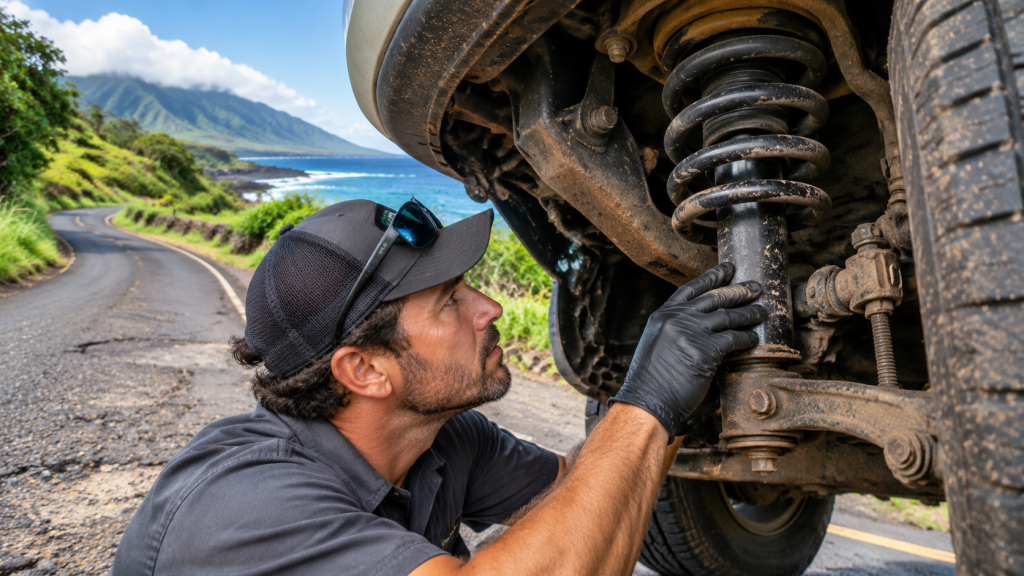
Maui is famous for roads that are as beautiful as they are hard on a car. Winding stretches along the coast, steep climbs up the slopes, narrow lanes through the countryside and the occasional patch of broken pavement all send a constant stream of bumps, jolts and sharp turns through your vehicle. The part that takes the brunt of it is the suspension. Shocks, struts, springs, bushings and control arms quietly absorb the punishment so the ride stays comfortable and the tires stay planted, but they do not last forever. This guide explains how rough rural roads wear down your suspension, the signs that something is worn, what a technician will look at, how repairs usually work and what you can do to extend the life of the parts. If you are searching for suspension repair in Maui, here is what to know.
What the Suspension Does
The suspension connects the wheels to the car and has two main jobs. First, it keeps the tires in firm contact with the road so you can steer, brake and accelerate safely. Second, it absorbs bumps so that passengers are comfortable and the car body does not bounce around. Several parts work together:
- Springs hold the weight of the car and flex over bumps.
- Shocks and struts are dampers that control how the springs move, so the car does not keep bouncing after a bump. A strut is also a structural part of the suspension on many vehicles, while a shock is not.
- Control arms and ball joints link the wheels to the frame and allow them to move and steer.
- Bushings are rubber or polyurethane cushions that reduce noise and vibration at connection points.
- Sway bars and links help limit body roll in turns.
- Tie rods and other steering parts connect to the suspension to guide the wheels.
How Maui Back Roads Wear on Suspension
Smooth highways are easy on a suspension. Rural and mountain roads are not. Several things add up on the island.
- Rough and patched pavement. Potholes, cracks, uneven edges and repaired sections create repeated impacts.
- Steep grades and sharp curves. Hills and tight turns load the springs, dampers and sway bars unevenly.
- Unpaved sections and gravel. Loose surfaces and washboard roads make the shocks work constantly.
- Speed bumps and dips. Hitting them too fast can stress parts and bottom out the suspension.
- Salt air and moisture. Coastal conditions speed up rust on metal parts and can harden or crack rubber bushings and boots.
- Heavy loads. Gear for the beach, a full car of passengers or a roof rack can add stress.
- Heat and sun. Rubber parts age faster in a warm climate.
Our guide to car care tips for Maui drivers on volcanic terrain and steep roads covers more of the ways island driving affects your car beyond the suspension.
Signs of Worn Shocks and Struts
- A bouncy ride. The car keeps rocking up and down after a bump or a dip.
- Nose dive when braking. The front of the car dips sharply as you slow down.
- Squat when accelerating. The rear drops when you speed up.
- Body roll in turns. The car leans more than it used to, or feels unsteady in curves.
- Drifting or swaying in crosswinds or at highway speeds.
- Clunking, knocking or rattling over bumps, which can point to worn mounts, links or bushings as well.
- Uneven or cupped tire wear. Patchy scalloped wear on the tread can result from a wheel that bounces.
- Fluid leaking on the outside of a shock or strut body.
- Longer stopping distances or a feeling that the tires are not gripping as they should.
- A harsh or floaty ride. The car feels either jarring or loose.
Other Suspension Warning Signs
- Pulling to one side, which can also be an alignment or tire issue.
- A loose or vague feeling in the steering.
- The car sitting lower or unevenly, which can point to a broken or tired spring.
- Squeaking or creaking when going over bumps or turning, often from dry or worn bushings or joints.
- Cracked or torn rubber boots and bushings.
- Vibration through the steering wheel or the floor.
Many of these symptoms overlap with tire, wheel bearing, brake and steering problems, so a professional inspection is the way to know what is actually wrong.
Why Suspension Problems Are a Safety Matter
It is easy to treat a rough ride as only a comfort issue, but worn suspension parts affect safety. Weak dampers can lengthen stopping distances and let the tires lose contact with the road over bumps. A badly worn ball joint, control arm or tie rod can fail suddenly and make the car difficult or dangerous to steer. If you notice any of the following, stop driving and get help rather than continuing:
- Steering that suddenly feels loose, wanders or does not respond properly.
- A loud clunk or bang followed by a change in handling.
- A wheel that appears tilted or a corner of the car sitting noticeably lower.
- A part that looks bent, broken or hanging down.
- Severe vibration or a wobble.
Your owner’s manual explains the warning lights on your dashboard and is the best guide for service intervals specific to your vehicle.
What a Technician Checks
- A visual inspection of shocks, struts, springs, boots, bushings and mounts for leaks, cracks, rust and damage.
- A bounce and movement test, pressing down on the car or moving the wheel by hand to check for play.
- Checks of ball joints, tie rods, control arms and sway bar links for looseness.
- A look at the tires for uneven wear patterns and for correct pressure.
- A test drive, to feel and hear the problem.
- An alignment check, since worn parts and rough roads can push the wheels out of position.
Repair Options: What Usually Happens
- Replacing shocks or struts. These are typically replaced in pairs on the same axle so the car handles evenly. On many cars, a strut assembly includes the spring, and the job involves taking the assembly apart, which requires care and the right tools.
- Replacing springs, mounts and bushings where they are worn or broken.
- Replacing control arms, ball joints or tie rods when they have too much play.
- Wheel alignment after many suspension repairs, since the geometry of the wheels can change.
- New tires, if the old ones have worn unevenly from a suspension issue.
The right repair depends on what is found. Ask the technician to point out the worn parts and explain why they recommend each one. A trustworthy shop or mobile mechanic will be open about what is urgent and what can wait.
Can a Mobile Mechanic Handle Suspension Work?
Some of it, yes. A mobile mechanic can come to your home or workplace in Maui, inspect the suspension, check for leaks and play, and replace many parts, such as shocks, sway bar links and some other components, on site. Other jobs, such as certain strut assemblies that need spring compressors, parts that are seized from rust, or wheel alignments, may need a shop with a lift and an alignment rack. A good technician will tell you honestly what can be done where you are and what is better done in a shop.
Prepare Your Car for the Road to Hana and Other Long Drives
Long scenic drives with many curves and rough patches are a real test for a suspension. Before a big trip, a quick inspection is smart, since a worn part can fail where help is far away. Our Road to Hana car checklist lists what to check before you go, including parts that work with the suspension, such as tires and brakes.
How to Make Your Suspension Last
- Slow down for bumps, dips and rough patches. Speed multiplies the impact.
- Avoid potholes when it is safe. Look ahead and steer around them.
- Do not overload the car. Stay within the load limits in your owner’s manual.
- Keep tires inflated correctly and have them rotated as the manual advises.
- Rinse the underside of the car to remove salt and mud.
- Get regular inspections, especially if you drive rough roads often.
- Fix problems early. One worn part can speed up wear on others.
- Have the alignment checked after a hard impact or if the car pulls.
Quick Summary
- Rough, steep and coastal roads wear out shocks, struts, bushings and joints.
- Look for bounce, nose dive, clunks, uneven tire wear and leaks.
- Worn suspension affects handling and stopping, so do not ignore it.
- Stop driving if steering feels loose or a part looks damaged.
- Some repairs can be done at your home, and others may need a shop.
A well kept suspension keeps your car comfortable, steady and safe on the roads that make Maui special. If you would like help, visit the Mobile Mechanic Pros of Maui homepage to learn more, or contact us to schedule a visit.